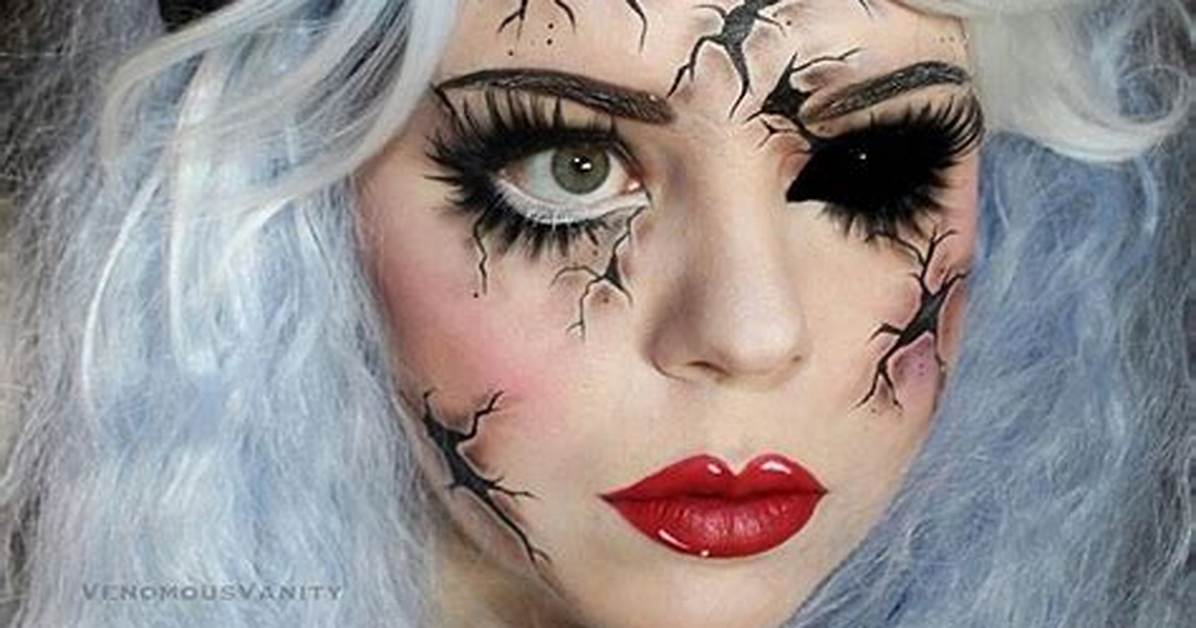
Human beings possess an acute neurological radar for faces that are almost human, but slightly off. Ernst Jentsch first analyzed this psychological tension in 1906, noting that wax figures and automatons provoke dread because the mind doubts whether an apparently animate figure is truly alive, or whether a lifeless object might possess consciousness.
The beauty community tapped into that innate unease through the broken doll eye effect. In late 2022, pop star Katy Perry sparked a widespread digital frenzy when her right eyelid appeared to glitch shut during a Las Vegas residency performance. As reported by Cosmopolitan, the mechanical fluttering sparked endless TikTok mimicry and reignited interest in human-automaton mimicry. The shattered doll aesthetic builds entirely around this tension.
When cosmetics mimic brittle china, the human face underneath becomes a puppet or a relic. By painting exaggerated porcelain doll lips, blocking out natural eyebrows to redraw high-arched Victorian brows, and crafting mechanical fissures that reveal empty black voids underneath the cheekbones, artists transform familiar bone structures into haunting sculptures.

